
Railed vs Rail-less Solar Mounting
When planning a rooftop solar project, one of the most critical decisions you’ll make is selecting the best racking solution. Solar racking keeps your panels secure and aligned, significantly influencing the array’s overall performance, aesthetics, and longevity.
Two primary categories of rooftop mounting systems dominate the market today: railed and rail-less. Understanding the differences between these systems can help you tailor your solution to the project’s unique conditions—from the roof type and local climate to labor preferences and installation logistics.
In this post, we’ll dive into the key considerations when choosing between railed and rail-less mounting solutions. We’ll also explore leading brands like K2, Unirac, SnapNrack, and SunModo, which offer a range of innovative products designed to meet the demands of modern solar installations.
What Are Railed and Rail-less Mounting Systems?
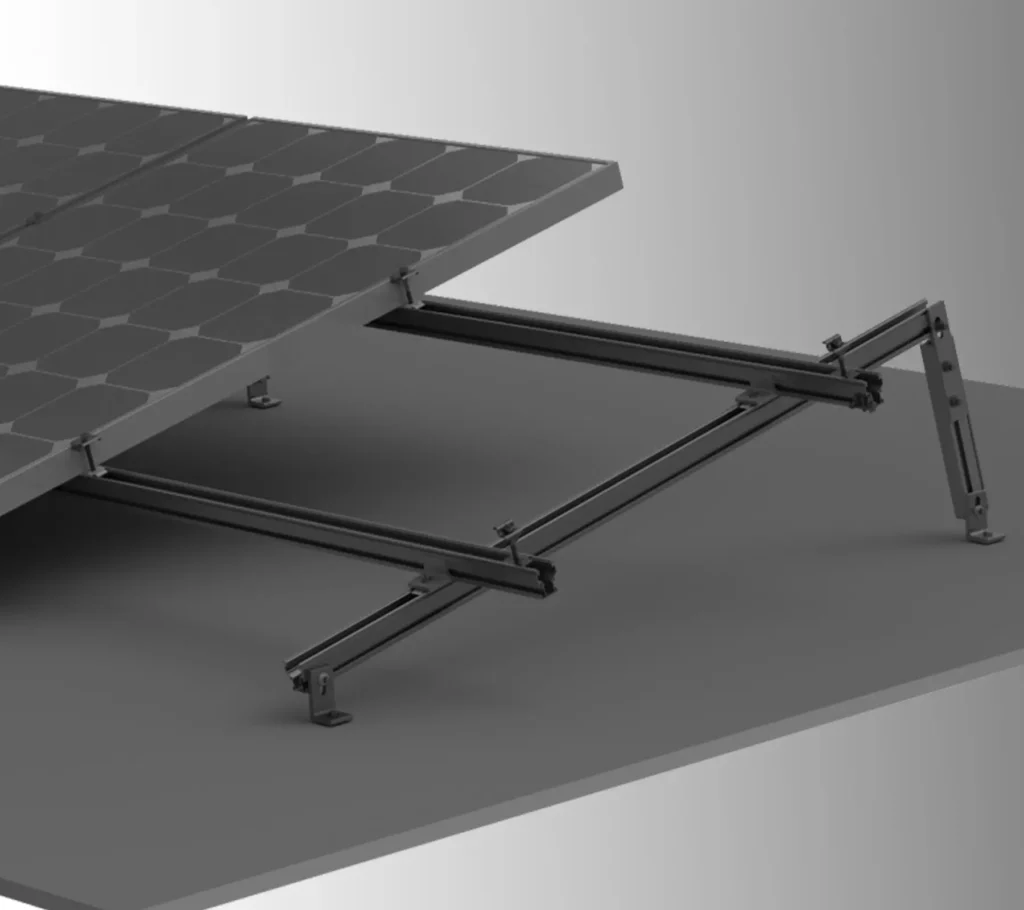
Railed Systems:
Railed mounting solutions, as the name suggests, rely on long, horizontal rails affixed to the roof. Solar modules are then attached to these rails using clamps, providing a consistent, linear anchor point. Railed systems have long been the industry standard, particularly in residential and light commercial installations.
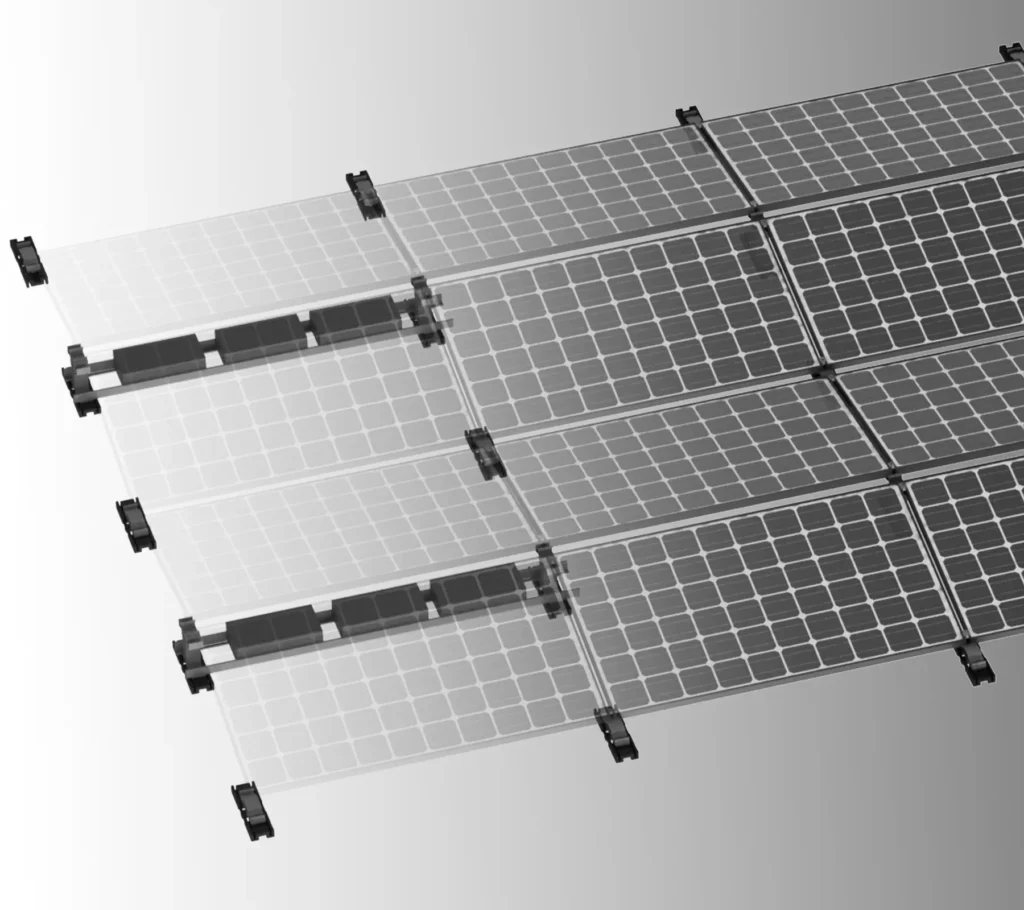
Rail-less Systems:
Rail-less (or rail-free) systems skip the continuous rails altogether. Instead, they secure mounting hardware directly to the roof deck or underlying structure, with modules attaching to discrete mount points or micro-rails. This approach reduces the number of bulky components, making shipping and handling easier while presenting a streamlined, low-profile aesthetic.
Key Factors to Consider
- Roof Type and Material
- Railed Systems: Offer unparalleled versatility. They are compatible with shingle, tile, metal, and flat roofs and can integrate with tilt kits for low-slope installations. This adaptability makes railed solutions like Unirac’s SOLARMOUNT or SnapNrack’s Ultra Rail a go-to for projects spanning various roof materials.
- Rail-less Systems: Excel on relatively flat and uniform surfaces, commonly used on composition shingle roofs. Some options from K2 or SnapNrack’s TopSpeed systems can also handle metal rooftops via specialized attachments. While rail-less solutions can be used on tile roofs, they may require more advanced flashing and alignment techniques due to limited mounting points.
- Structural and Climate Considerations
- Railed Systems: Rails distribute loads more evenly across multiple attachment points. In regions with heavy snow or high wind loads, railed solutions are often favored for their robust and proven structural performance. Systems like Unirac’s SOLARMOUNT or SunModo’s rail-based mounts can be easily engineered to meet local code requirements.
- Rail-less Systems: Modules bear more of the vertical load, which can be a factor in areas with severe weather. Though rail-less systems are rigorously tested and code-compliant, installers must pay close attention to vertical alignment and attachment spacing to ensure proper load distribution. Manufacturers like SnapNrack and K2 offer engineering guides and advanced hardware to accommodate moderate snow and wind conditions.
- Installation Efficiency
- Railed Systems: Installers are familiar with rails, making training simpler and installation faster in many cases. Rails create a consistent reference line, simplifying module alignment. Accessories like pre-assembled clamps and integrated grounding from Unirac or SnapNrack allow for quick and precise panel placement. However, handling long rails can be cumbersome and requires cutting and managing more components.
- Rail-less Systems: Without the need to transport and cut full-length rails, installation teams can reduce on-site material handling. Companies such as K2 and SnapNrack have developed rail-less solutions that pack into compact boxes, simplifying rooftop logistics. However, rail-less systems demand greater precision in alignment since each mount must be placed correctly—there’s no continuous rail to “correct” slight roof irregularities.
- Aesthetics
- Railed Systems: Traditional rails are sometimes visible at the array edges. Manufacturers now offer sleek rail profiles, end caps, and low-profile skirts—like SnapNrack’s SkirtRail or Unirac’s trim options—to improve curb appeal.
- Rail-less Systems: By eliminating long rails, you achieve a cleaner, more integrated look. Many rail-less solutions include top-down clamps, skirts, or frame-level wire management that blend seamlessly into the array.
- Wire Management and Accessories
- Railed Systems: The open channel inside the rail is a natural conduit for neatly concealing wiring, optimizers, and microinverters. SnapNrack’s Ultra Rail and Unirac’s SOLARMOUNT both offer comprehensive wire management clips and integrated grounding solutions.
- Rail-less Systems: With no rail channel, cabling must be managed directly on the module frame or via add-on clips. K2, SnapNrack, and SunModo have developed specialized wire clips, MLPE mounts, and junction boxes to streamline cable runs, ensuring code compliance and long-term reliability.
When to Choose Railed vs. Rail-less
Railed Systems Are Ideal If You:
- Need maximum flexibility with roof types and slopes.
- Work in regions with heavy snow/wind loads.
- Prefer the familiarity and straightforward alignment afforded by rails.
- Value easy wire management within the rail’s open channel.
Rail-less Systems Are Ideal If You:
- Want fewer bulky components on the roof.
- Prioritize low-profile aesthetics and sleek design.
- Seek to reduce the effort of hauling and cutting rails.
- Are confident in aligning mounts and comfortable with a more precise installation process.
Leading Brands and Their Offerings
- K2 Systems: Known for versatile, high-quality racking solutions, K2 offers MiniRail for rail-less and various other pitched-roof systems that emphasize simplicity and reliability.
- Unirac: A market leader known for its SOLARMOUNT railed solutions, Unirac also provides a full range of attachments, wire management accessories, and quick-to-install systems like NXT UMOUNT for more efficiency-driven projects.
- SnapNrack: Offers both railed (Ultra Rail) and innovative rail-less mounting (TopSpeed and RL systems), with a focus on installer-friendly designs, robust wire management, and intuitive snap-in hardware.
- SunModo: With a broad product line, SunModo provides railed and rail-less solutions tailored to various roof types and project sizes. Their mounting kits are known for strength, adaptability, and competitive pricing.
Conclusion
Choosing between railed and rail-less mounting ultimately depends on your project’s unique priorities. Are you facing challenging roof conditions or looking for top-tier structural redundancy? A railed system might provide the peace of mind and familiarity you need. Craving a streamlined aesthetic, reduced logistics, and a lower profile? A rail-less approach could be the perfect fit.
As a leader in delivering turnkey solar solutions, Energy Solutions and Supplies is here to guide you through this decision-making process. We’ll work closely with you—evaluating your roof type, load conditions, local codes, and aesthetic preferences—to identify the ideal racking system. By leveraging top brands and the latest industry insights, we ensure your project is both cost-effective and built to last. Your journey to a flawless rooftop installation starts with choosing the right racking partner—and we’re here to help make that choice a confident one.
Stay informed on the latest developments in energy logistics and the renewable energy sector by following our blog and connecting with us on social media [LinkedIn, Facebook, Instagram] . For customized solutions and expert insights, feel free to contact us directly—we’re here to simplify your journey toward sustainability and energy independence.
References:
Reference 1- Solar Powered World Online
Reference 2- Blog on Rail vs Rail-less System